

They Call Themselves Americans?
On a smuggler’s night, an American identity gets challenged.

Table of Contents
Introduction
Featured Story
Personal Updates
Next Month’s Story
Introduction
Story:
What Do You Mean—Americans?
Author:
Wilbur Daniel Steele
Genre:
Literary Suspense
Note from Nikita:
Ever listen to old men grumbling about how the country’s going to hell, kids have no respect, and nothing’s like it used to be?
Usually, it’s just confusion: they don’t get the clothes, slang, or music, so they assume the world is ending. But sometimes it’s deeper: a fear of anything unfamiliar.
Today’s story starts with two old men complaining about the youth. But by night’s end, it’s clear the kids aren’t ruining the country. They’re as American as anyone.
That hits home for me. My parents always said, “You’re Americans.” And I am, even if my name isn’t John Smith.
I’d love to hear about any memorable “kids these days” speeches that you’ve listened to. Leave a comment or hit reply.
But for now, enjoy “What Do You Mean—Americans?” by Wilbur Daniel Steele.
What Do You Mean—Americans?
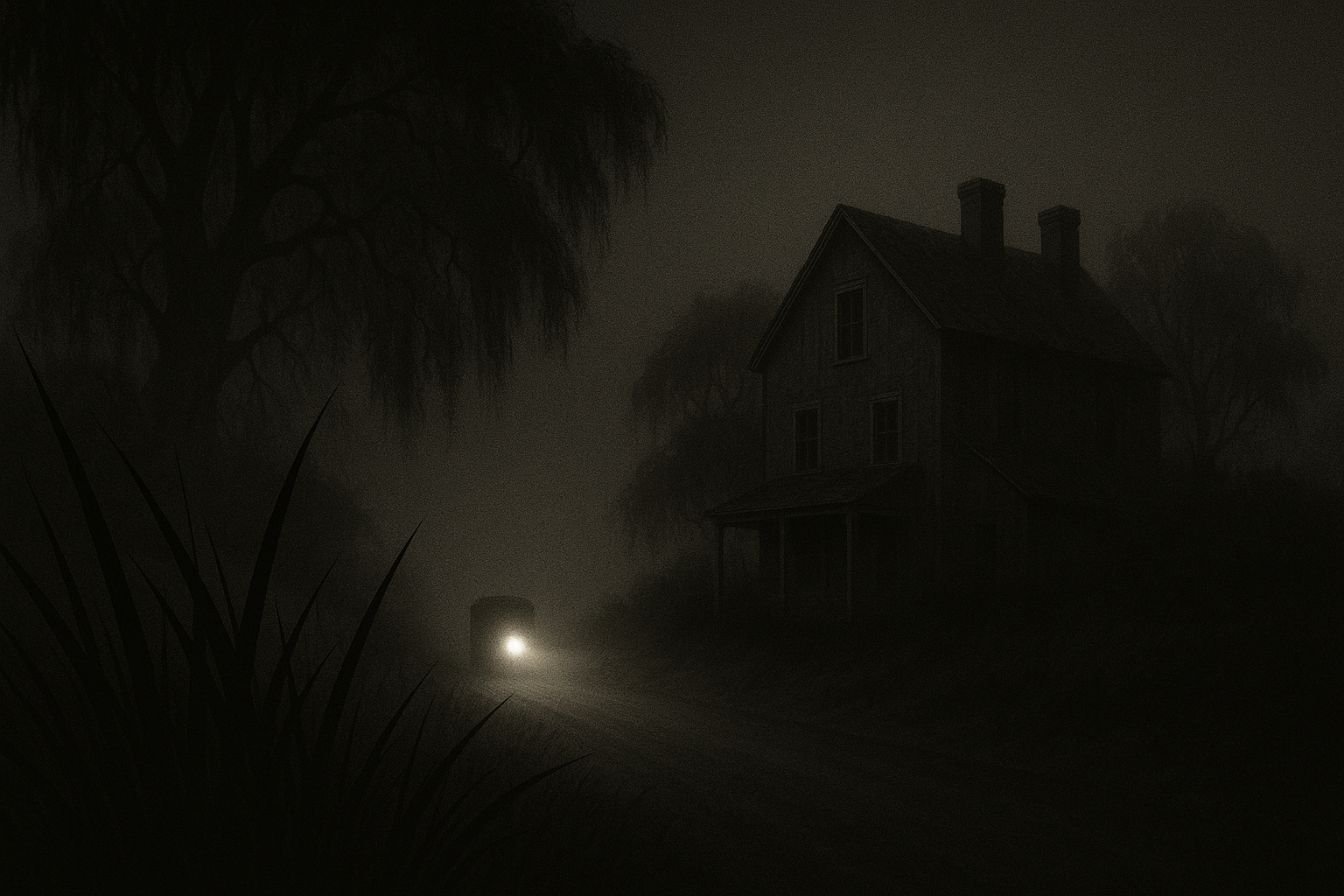
They live in the land of the old—old houses, old sands, old men. Already they dream that when they are gone, the tides, which seem to eat deeper into the Cove each year, will carry what’s left of Cape Cod down under the water of the Seven Seas. And that time is not far off now: only a few folks are left.
You can count the families on one hand. There are the Whites and the Fullers in the Hollow, the Rogerses at the Bog, and the Brewster brothers at the Cove. That’s about all now in this fragile, half-drowned, seven-mile stretch of the Cape. Among the Whites and Rogerses there are four generations, and in the Fuller house, three. These latter lines run thin and feeble.
The younger Fullers are a long way from the Edward Fuller who came ashore to pray, battle Natives, and leave his name on the Pilgrim Tablet in Provincetown. Modern-day Eddie Fuller yawns and tends to his pimples behind the post office boxes. The Whites of old called themselves the “subjects of the dread sovereign.” The modern Whites are to be found at frantic parties, sipping bootlegged liquor and listening to radio jazz while twitching like pained frogs.
Some of the remnants of the stock still share a roof with the older generation: Sam White and Benjie Fuller in the Hollow, Ember Rogers at the Bog, and Andy and Isaiah Brewster at the Cove. These men hauled Kennebec ice-cakes to Calcutta and sailed new Chinese tea up the Thames in the Sea Glory and the A. J. Stowell, arriving two weeks ahead of London’s own East-Indiamen, in the days that were days.
In those days, the Cape raised strong women, too. Look at Molly, Andy Brewster’s wife, long since dead. Then look at the Molly Brewster of today. She keeps house for her great-grandfather Andy and his brother Isaiah at the Cove, and what a house she keeps. Nothing like the way the other Molly kept it sixty years ago. Bread baked in Boston, beans baked in Chicago, and cake shipped in cardboard from who-knows-where. She says she hasn’t the time.
Hasn’t the time! The old men in her house—Andy and Isaiah—grasp the sad, deep, literal truth of it. She has no time. She was born too late to take on the traditions of her elders. She does not know what appearances to keep up, what character to develop, what future to prepare for. Watching her from under their dim, watery eyes, they understand.
They understand why she speaks in a language of bold, careless words, why her gestures are all immoderate and her songs off-key, and why she goes about unashamed with skirts that short and lips that red. They understand why she is never at home in the evenings, quilting under the sitting-room lamp. As soon as the supper dishes are stacked, she’s gone with a wave and a toss of her hair, slipping out to flirt with God-knows-who in the dark. Poor girl. She hasn’t even the time to care about what company she keeps.
And now they must sit and watch, two blond Vikings of the republic who carried the Stars and Stripes around the world, who could smuggle good rum ashore under the dark of the Cove like the freemen they were and still have time to walk up to the meetinghouse in their Sunday best to worship the God of Massachusetts as only free men could. Now they must sit shackled to their rockers by the weight of their proud years and watch the last of their line sink into ruin.
They could smuggle good rum ashore under the dark of the Cove like the freemen they were and still have time to walk up to the meetinghouse in their Sunday best to worship the God of Massachusetts as only free men could.
At the Dorcases’ ice-cream social last autumn, the two old fellows, in mournful good humor, teased the schoolteacher about her shrinking flock.
She looked genuinely puzzled. “Don’t you worry—I’ve got my hands full now, and they’ll be even fuller before long, once we put in the new classroom.”
Isaiah looked at Andy and Andy at Isaiah. One winked, the other cackled. A new classroom? They were too smart for jokes like that.
And now, before them, a figure comes out of the deepening shadows. His approach is announced by the echoing hills around the Cove: the clank of a loose brake-beam, the whine of grinding springs, the hiss of leaking gaskets.
Andy and Isaiah see him now from their porch rockers behind the mosquito netting—head, shoulders, and restless arms of a man sitting in the body of a rough half-ton truck. He careens to a halt under their ancient, uneasy willows. His machine breathes heavily through its battered cylinders. It has one glassy, shining eye. That eye stares now at the house beyond the turf, their house, native and noble, its roof like another slope of the nearby moors.
Still inside his metal shell, the man calls through the dusk. “Molly home?”
Neither Andy nor Isaiah answers. Rock, rock, rock—their chairs creak, their dry bones creak, their eyes meet, full of repugnance. They would sooner have their tongues cut out than speak.
No need. Molly answers herself. “Just a second, and I’ll be with you, Jim, old pal.”
She slips out between their rockers—hatless, bare-armed, stockings carelessly worn—neither a mother of tomorrow nor a daughter of yesterday.
Andy writhes. “Where are you bound for, Molly?”
Isaiah writhes alongside Andy. “Where you going?” He had sworn never to ask again.
“Oh, nowhere special. Just up to the dance at Chatham, that’s all. Oh, for heaven’s sake, Jimmy, cut out that honking: I’m on my way. Now, Daddies, off to bed like good boys. Sleep tight, sweet dreams.”
Sleep? Dreams? What a mockery.
Their rockers fall silent. Leaning forward, gripping the chairs’ arms with their vein-corded fists, they watch the truck’s iron flight into the mists of the falling night, its echoes fading from the hillsides. They’re crossing the marsh now, Molly with this… What-is-he? This Greek. What’s-his-name? J. Krenk, General Trucking. Jimmy the Greek. And Molly Brewster.
A reckless, helpless anger sweeps over them. If only their legs could run as swiftly as their thoughts.
Let him take her. Let him carry her back to his lemon-peddling, olive-reeking shack by the docks. Then let her see. Then let her remember the other women, the other Mollys, her foremothers.
Memories overwhelm the two men. Their tantrum fades and gives way to nostalgia. They turn abandoned and defeated.
“I can’t breathe,” Isaiah says.
The mosquito netting is a cage, stifling their lungs and drawing a faint, cold sweat to their skin.
Andy jerks forward. “Nor I.”
Moved by a common impulse, they rise and rush outside.
Where are they going, lifting their feet so diligently along the shell-strewn road? Where and why?
“We’ve forgotten our hats, Isaiah. Your head gleams bald as a porpoise.”
“What matter? Our heads, our hearts, our rheumatism… What does it matter?”
“Shall we drop in on Sam White? The night’s so fine.”
“So we might. Heard he was ailing a trifle.”
Two shafts of light sweep across the dark. They stop with a snort, glaring at the startled old men.
A voice calls from inside the machine. “Here they are.”
Andy gasps. “Why, if it ain’t the White boys. We was just bound your way.”
“Well, Ma said we should stop by to tell you and save you the trip. The funeral’s Friday at two.”
The machine squats on its rubber haunches, purring, staring into their vacant faces. After a moment, the voice calls out again.
“You’d heard about Grandpa, hadn’t you? Passed last evening. Quiet, no pain. And the funeral’s Friday at two.”
The machine waits a beat, then streams off up the valley, leaving their eyes full of stars.
“Sam,” Andy says.
“Sam,” Isaiah says.
The lights, the suddenness.
They knew this was long predestined in the calendar of their years. No matter, the night has turned a corner and become apocalyptic.
The night has turned a corner and become apocalyptic.
Sam White is gone.
The cage of the mosquito netting is still behind them. The eighty-year prison of the dark house awaits them. Sleep, dreams, and mockery.
“No, sir,” Andy says.
“Not by a long shot,” Isaiah says.
They bolt from the road and flee across the poverty grass.
But why? They knew Sam would have to go sooner or later, surrendering his share of space to the returning wilderness and the rising tides. Just as they know that Benjie and Ember will have to give up theirs, and they themselves, and let the tired Cape sink away.
They’re foolish, but something in this night feels unleashed. Something pursues them and climbs their legs like a false strength, like another childhood.
They scramble up Sheep Hill for all they’re worth, mouths open, as if the valley behind were filling with floodwaters. At the crest, they look back and see the country familiar to them: folded moors, dunes, winding marshes, will-o’-wisps, and ghost-fires.
There’s John Champion’s house a mile to the east. John died twenty years ago, and his daughter’s family moved to Iowa. Yet there seems to be a light in it now, a goblin cheer. Dave Burch died back in the 1890s. His children live in Los Angeles. But the old house, hidden under the cottonwoods in the Flat, seems to open a glowing eye, mocking them from the distance like a ghost. And there again, a light like a lamp on Borneo Plain. And there again: another light, as if people were still there, as if the land were alive with families.
There is one element that never deceives but always plays fair. If the land is tricking your eyes, old fellows, turn them toward the sea.
Across the water, the sky toward Boston holds the last loom of dusk. Not far offshore, across the mouth of the Cove, a fisherman sails, his faint masts upright in the meager breeze. Farther off, toward the lights along Provincetown’s shore, a monster lies at rest.
Yes, a monster, ink-black and streaked with fire, a Leviathan blowing a heavy, lazy spout.
“She came in with engine trouble,” a voice says.
There is another watcher on Sheep Hill. He rises from a beach-plum bush at their feet, his coat draped over his head.
“I never seen her before, and that’s funny, because my boy sails in her. He says she’s like a city. Fifty-nine thousand tons! What you know about that?”
What, indeed, do they know about that? Only that the night is playing another trick, painting enormous shadows upon each other. As though Isaiah and Andy—the master and mate of the incomparable Sea Glory—could be fooled by such a thin jest: a ship as huge as eighty Sea Glories?
“I tell you,” the figure says, “the English and Germans, they’ve got nothing on us now. One day us Americans will be as big a shipping nation as them on the sea, you watch.”
It’s too much. Andy and Isaiah open their mouths to chuckle, but before the chuckle escapes, a hot, contemptuous anger rises in their throats.
“Who are you?” Isaiah asks.
“Where are you from?” Andy asks.
These are the same voices that once rang out full-throated and commanding over the decks of ships. Echoes now, but echoes still powerful.
The voice that answers sounds taken aback.
“Wh-wh-who am I? You know me, Mister Brewster: Manuel Braganza. You’ve seen me around plenty. Since five years, I’ve got the old Champion place back here, across from Jimmy the Greek. I guess you know me, all right.”
“Nope.”
“It’s Manuel, Manny from Lisbon.”
“Never heard the name.”
“You… you’ve never heard of my boy Johnny?”
“Johnny who?”
Silence. A shake of the head. The figure has no reply. Slowly he fades before their eyes like a receding whisper of sand and vanishes into the dark above the unseen Cove.
They feel wonderful, solid on their own hill again, and they begin to tower.
But they’re drawn to the sandy precipice where he vanished. Their triumph has suddenly loosened their memories. Their feet follow old paths, their tongues begin to wag.
“Remember the night the revenue man come snooping?”
“When the skiff turned bottom-up on the beach, with three barrels of rum under it, and me under it with them, my legs sticking out in full view?”
“And the ship out there, about where that fisherman is now?”
“The Abraham, wasn’t it? And Ezra Small?”
They pause. Where are they? What in heaven’s name are they doing here, two old flies, clinging halfway down the steep sand? One thing is certain: if they don’t catch their death one way, they’ll catch it another.
They pause. Hunkering down as the sand slides beneath them, they gaze at the sea. In the cobwebbed starlight, it might truly be the Abraham out there, with Captain Ezra pacing the deck, chewing his whiskers, and wondering what’s wrong with the Brewster boys ashore.
“Remember that night, eh?”
“And Molly?”
“Molly? Painted mouth, empty head in the truck with that Greek?”
“By thunder, no! Molly I mean. Molly!”
She was the wife of one, the sister-in-law of the other. Years have almost erased that imbalance. To each she returns in memory as all beauty, all quiet courage, all grace. A woman of those days.
“Remember Molly that night, Isaiah? You couldn’t see her, though, stuck under the skiff. The way she came tripping down out of nowhere, took one look at your boots sticking out like a hamstrung turtle, sat herself right down on the skiff, smoothed her skirts out over, and sat there gazing at the stars as calmly as if she stargazed every night with a shotgun laid across her lap. And you couldn’t see the way that revenue man hesitated, craned his neck, and came to a halt.”
She sat there gazing at the stars as calmly as if she stargazed every night with a shotgun laid across her lap.
“I heard him, though, Andy.
‘Pleasant evening, Mrs. Brewster!’
‘Pleasant evening, Mr. Perkins!’
‘I’m aiming to have a look under that skiff, if you don’t mind, Mrs. Brewster?’
‘In which case, Mr. Perkins, you’re aiming to do something you ain’t able to, so long as I’m sitting on it.’
‘In which case, Mrs. Brewster, I shall have the law down on the lot of you—’
‘In which case, Mr. Perkins, I’ll have something a sight quicker than the law on you, sir.’
(At that, I hear the gun-butt easing along the garboard strake.)
‘Quit it, Molly Brewster!’
‘Git, Eben Perkins, and git quick!’”
“And Revenue left!”
“Never hear the last of it, did he? Nor he ever come snooping this way again, eh?”
“Feared meeting Molly! Heh-heh!”
The gentlest, the most steadfast of women. What tribute could be more precious to the heroine of long ago than this laughter of old men?
“What’re you doing here?”
Their mouths go dry and fall open.
“Oh, it’s old Isaiah and old Andy.”
Isaiah stammers. “But who are you?”
“Don’t you recognize me? Tony Fuller from the Coast Guard. You know me.”
“Tony? Tony Fuller? Impostor! There’s been Eds and Ezras, Johns and Jonathans but never a Fuller called by a name as ‘Tony.’ No-sir-ee!”
The figure chuckles, rubbing his lips with a ghostly sleeve.
“Farquiera was my mother’s name when she came from the Azores. Or if you’re bent on some tongue exercises, try saying this name: Soblievski . Sohb-lee-ef-skee. Can hardly say it myself. It’s the name of the policeman down the road to the left. So you go along now, quietly, and tell him I sent you, and he’ll let you through. Skedaddle, my boys.”
A dozen retorts press at their scandalized lips—arrogant laughter, withering old curses. Yet dumbly, they flee like spiders through the sand, not knowing why. They stumble down the hill, their own cliff. The ground is covered with lichens, a streak of half-clay, and ruts. A clam-and-weed scented wind bears them along. The air, once as familiar as the years of their youth, has turned secret and strange. It carries them to Sergeant Belkar Soblievski of the State Police, who snaps on the headlight of his motorcycle and studies them in its yellow cone of flame.
“You’re out late, my friends,” he says, his voice kind. “Go on the way you were going my fathers, keep your mouths shut, and no harm will be done. Good night.”
From behind Isaiah and Andy, the yellow flame leads them to their ancestral Cove. Willows rise out of the hill ahead, along with the slope of a roof, two squat chimneys, and a fence. They are coming home after all.
Their boots drag. Body and soul, they are dead tired.
The house opens and swallows them. No need for a lamp. They can find their beds in the dark.
“Watch the table, Isaiah.”
“Take care with that sagging door.”
“It must be fixed, no question.”
Here’s Andy’s chair, and here’s Isaiah’s, ready to hold their coats, trousers, and shirts.
There’s nothing left but sleep, then. Deep sleep. Sweet dreams.
Isaiah, the youngster of the two, lies on his back, toes up, wide awake. Andy, across the room, lies toes up too, counting sheep. One sheep over the fence; two sheep over the fence; three sheep over the fence.
Manny from Lisbon… That’s a dirty port, Lisbon.
What was that noise? There! Again!
The hall clock is silent—still silent after many years—but Molly’s alarm clock gives a thin cheeping from the kitchen. Where can Molly be?
Five sheep over the fence; six sheep—
There’s that noise again.
“Andy?”
“Yes, Isaiah?”
Isaiah slips out of bed, tiptoes across the room, and climbs in beside his elder brother. It’s nearly seventy years since Isaiah last did that.
“What’s wrong, boy?”
“I heard something in the room, and I can’t sleep.”
They’re not used to lying awake. It’s this night. This night of strange tremors in the air and twilight invasions.
“Pshaw, Isaiah, now you turn over, shut your eyes, and—”
Andy sits bolt upright, listening.
Thud! A break in the atmosphere, small, without echo. A gunshot, unmistakable. Then more… Thud! Thud! Thud!
“Isaiah, you hear anything?”
The youngster lies there with the quilt tight over his chest. It is a terrible thing, after being equal to anything and everything, to find yourself suddenly like this. His voice comes thin as eelgrass.
“Where’s that girl?”
It’s too much for Andy. He joins in. “Why doesn’t she ever come home? What’s she thinking of, at this hour of the night?”
“It ain’t decent, Andy. What’ll folks say?”
“What does she care?”
“What does she care if she keeps us awake for her?”
“Who are we, anyhow? What do we amount to?”
“What does anything amount to these days, except cavorting about, dancing, maybe hugging, forgetting your religion, your elders, your upbringing—anything just to make the time go by?”
“And let the rest go to hell.”
There’s a cry, hollow with distance. Someone going to hell, perhaps. What was the sound? Anger, terror, mortal pain?
There’s a cry, hollow with distance. Someone going to hell, perhaps.
“A-n-d-y, I—I wish that girl were home.”
“I—I wish she were.”
The shame of it, confessed at last, together, out loud. Isaiah Brewster, who in the name of the Great Republic once stood before the Emperor of Siam. Andy Brewster, who with his own hands clapped half his crew in irons at the height of a typhoon. And now the two of them, praying for nothing more than the sound of Molly’s dance shoes on the floor beyond the wall, wishing for the comfort of her reckless youthfulness under the roof with them.
Wait!
Isaiah is up now, sitting as rigid and gray as Andy.
A whine of springs and beams and gaskets approaches.
“It’s him.”
“It is!”
“He’s at the marsh now—or—”
“N-n-no—no… Isaiah!”
“It don’t sound like he’s on a road.”
“It ain’t on a road. Not any road I know of. That’s somewhere to the north.”
“Sound to me like it was drifting somewhere up Borneo Plain—”
Thud! Then silence. The whine is gone.
“Isaiah,” Andy says, “lie down and sleep. This is foolishness.”
Minutes later, they spring up again.
A step on the porch.
They call out in the same breath. “Molly!”
No answer. Only the scratch of a match, somewhere in the kitchen.
“Molly Brewster!”
The match goes out. More footsteps. Strange footsteps.
The second match flares at the very foot of their bed, a blinding halo. In that glow appear two eyes and a lean, green-brown face.
“Got any rags, mister?”
Isaiah had seen faces like this before when he was mate on the fruit ship Hope Wade. He sat in an armchair on the deck and watched faces like this one load figs in Smyrna.
The whites of Isaiah’s eyes widen. “You’re that Turk—”
“Curse the Turk. He killed my father, my mother, my brother. I’m Armenian.”
“No, sir, no disrespect, but you’re from Turkey. You’re the one folks c-c-call the Turk, that sells carpets.”
A frown darkens the green-brown face. “You got any rags, mister?”
The Brewster brothers sit in silence.
The match burns a finger and arcs away in two red sparks, carried off by a foreign curse. Then, in reverse, the footsteps retrace themselves across the kitchen and across the porch.
A glimmer of moon filters through the cracks in the blinds. It must have been a dream.
Andy lies back and gathers his resolve. With determination, he pictures sheep, exactly the sheep as Dave Burch used to run on Borneo Plain—matted gray-brown bodies, slender legs snapping under them. One sheep, two sheep, three, four, or was it five?
Who’s that? Towering by the bed there?
It’s Isaiah, the youngster, pulling on his pants.
“You been asleep?” Andy asks.
“Not one blessed wink, and that’s the truth. No sir, everything I’ve seen, I’ve seen. Andy, there was a Turk came into our room. I saw him with my own two eyes.”
“What’s happening?”
“I don’t know. My heavens, if I knew, I—there! Listen!”
“That stomping?”
“Stomping, yes. Stomping, skittering, scuttling all about, whispering, too. There! Do you hear?”
“In the woodhouse. Or more like Molly’s room. Maybe it’s Molly.”
“I want to know.”
“Or cats.”
“I want to know.”
“She come home?”
“Never heard her.”
“Look in her room, anyway, on the chance.”
Andy fumbles his pale legs out of the quilt and into his trousers. They go in their stocking feet, carrying their boots.
Holding his breath, Isaiah eases open Molly’s door. His cheeks sink with relief.
“By glory, she be here all this time, asleep in bed. Us fools!”
Side by side, they gaze into the chamber, cave-lit with the seepage of dawn, perfumed with violet water, tar soap, and carnation powder. On the gray rectangle of the bed lies a head turned away on the pillow.
“Don’t wake her.”
The old fools.
Andy breathes. “Molly…”
The head on the pillow flops over. Black eyes study them, fixed and hypnotized.
Jimmy the Greek.
It was in this room, in that bed, that Molly White Brewster died on President Cleveland’s election day. It was through that window her soul went to heaven.
And now they can do nothing but stare, stare at their holy of holies, now untidy and unintimate, stare at the bed, the pillow, and the solitary Mediterranean presence there.
But what’s that?
Out from the blanket juts a leg wrapped with a crude bandage, dark with seepage.
They open their mouths to roar like lions. Instead, they bleat.
“Where’s M-M-Molly?”
He holds them with his black-and-white eyes. He says nothing.
“Where’s M-M-Molly?”
It’s Molly who answers. Her feet patter on the porch behind them. With a rush, she comes through the kitchen. With a fling of her arms, she brushes them aside like wraiths.
Worse than wraiths. It is as though, though still visible, no one sees them, as though reality has abandoned them and gone out into the middle of the room with Molly. Last remnants of a tradition, they feel faded beside her, her hair tousled, her shoes streaked with mud from another county, the hem of her torn petticoat dragging.
She’s on the bed’s edge, braced on hip and elbow. Her cheek presses against Jimmy’s face. Her wild hand combs through his black curls, questioning.
“Y’all right, kid? Tell me quicker’n quick: y’all right?”
“Are you all right, Moll?”
“Don’t worry about me! I look sick?”
“But, Moll—”
“Shush, kid, I know. I look like a home-made hangover. But you’ve got to consider: a hundred and thirty miles in that bus of yours is no tea-dance for a fair young thing. Especially the last fifteen of them with no tire left, just on the metal rim.”
She grins. “Cheer up. I’ll look better once I get a shot of coffee in me. And don’t worry about the stuff. I got it all safe and delivered to you-know-who, you-know-where. Thirty-one cases of booze, checked. You couldn’t have made the delivery quicker yourself, you poor angel. And that’s that.”
She takes a breath. “And the truck’s back in Costa’s garage with plates swapped. And that’s that. And that motorcycle cop was in Yarmouth Hospital at three—I just got word at the marsh—with his right arm out of commission. And that’s that.”
“Was it you, Moll, who plugged the guy, like Turkey says?”
“Well, I grabbed your gun when you dropped it, and I was mad. But don’t get me talking about it—”
“I grabbed your gun when you dropped it, and I was mad.”
“Listen, Moll, tell me something. Was it you who carried me up here from the Cove, like Turkey says?”
“Well, Turkey helped some—as quick as he could—”
“Where was the other guys?”
“Don’t forget they were busy. Who do you think led the cops away? Jazzy work for a while. But now, Jim, how’s your head?”
“Head’s clear.”
“And the leg?”
“Absolutely perfect.”
“Turkey bandage it right? With that petticoat of mine I tore off—”
“Couldn’t find any rags.”
Lord, it’s the Armenian himself, crouched on the carpet at the foot of the bed.
“No rags? Turkey, you’re hopeless! But listen—you mean that wounded leg is still—oh, you poor lamb. Now listen, Jim. I’ll be as gentle as I can, but I’ve got to take a look.”
It’s the strangest sensation. Andy and Isaiah had kept the old wallpaper in Molly’s bedroom as it always was—spotty and faded and quaint, covered with Venetian boatmen and early Victorian trees. And now, between two breaths, Andy and Isaiah are pictures among the boatmen and memories among the trees. They close their eyes. They cannot close their ears. The world swarms with murmurs and fragments and the relentless voices of the young.
“Doc and the priest ought to come—”
“No, Gabriel called the priest, said he needn’t come. Jim’s all right.”
“He’ll be all right, that is, if we can keep him lying low for a while—”
“But what’ll they say up-Cape when he doesn’t show up at shortstop for the Legion in the Barnstable game next Sunday—”
“Oh, we’ll get through it somehow. Hey, what’s that?”
Another kind of murmur now, a high, faint throbbing in the air.
“Molly! Here comes Doc Bader from Provincetown. I think it’s him anyway. Sounds like Gaspa’s seaplane. I’ll run up to the pond and guide him in.”
Then another sound, inside the room this time. “Good kid, did I hurt you? Oh, good kid, I tried to be gentle—”
“Gentle, Moll? Don’t talk. You’re the gentlest ever, and more than the gentlest. You’re the most beautiful, and the straightest, bravest—”
“Bravest? Stop kidding, you Greek idiot. I’ve been frightened sober. I’m still scared weak. Take hold of me and hang on tight-tight.”
“I’ve got you, tight. Only thing is, I hate to be a bother here.”
“Bother? That’s a laugh. It’s my house, isn’t it, Jimmy dear? And seeing we’re getting married this Friday, what’s the difference?”
Friday.
The two old men fade quietly away, out of the bedroom, out of the house.
It’s a fog-dawn. Light from the sunlit hills filters down at every angle through the pearly haze. It’s as if the night, instead of ending, had only been bleached away. Albino darkness. White shadows.
Once more, Andy and Isaiah leave the canopy of the willows and climb, panting, up Sheep Hill. The mist thins. At the top, they find the sun and the open air. And the sea. The monster is gone. The sea is honest again.
They drop onto a fallen timber and gaze at the water. After a while, Isaiah points a finger toward the wedge of the Cove, still lying in shadow below them.
“By cricky, she’s going fast these days, Andy. The ocean is swallowing the Cape. By cricky, won’t be many years before you can sail a vessel straight through the Hollow to the back side.”
A voice calls out from behind the brothers. “Where you get that idea from?”
They won’t have it. They won’t hear.
“Wasn’t so many years ago,” Andy says, “beach plums grew out there where those breakers are now.”
“Beach plums?”
A shadow falls across them, and a cloud of blue-and-amber cigarette smoke drifts over their heads. It’s Frankie Silvado, the surfman from Pamet Station, with his dark mustache and burning eyes. He might as well have yellow eyes and green whiskers for all Andy and Isaiah care: they won’t see him, and they don’t.
Andy clears his throat. “According to my calculations, Isaiah, the way she’s sinking—”
“What a story,” Silvado says. “I’ve been patrolling this shore ten years and more, and I used to walk the cliff because the tide covered all those grass flats. You old geezers aren’t keeping up with the times, or you’d know the land’s building up all the while. A professor gave a lecture in Provincetown last summer, and he said one day it might be solid ground all the way to Plymouth. Might have woods, farms, maybe even cities—
“Cities!”
The brothers feel betrayed. From one to the other passes a knowing, silent guffaw.
“Though,” Silvado says, “I don’t know what kind of people will be around to live in them, the way things are going now. This Cape crowd’s a bunch of smugglers—running liquor off these West Indies vessels for all they’re worth. The women are as bad as the men, too, from what Tony Fuller says he saw last night. Tell you the truth, I don’t know what this country of ours is coming to.”
Andy, with dogged patience, clears his throat again and turns to Isaiah. “As I was saying—the way the land’s sinking now—and the way people are dropping off—Sam yesterday, maybe you or me tomorrow—it won’t be long before there’s any left around here.”
“Any what?”
Like drops of water on a skull, it suddenly becomes too much.
“Any folks,” Isaiah says.
“Any folks?”
Now they spring up on their thin legs and face him.
“Any—any—Americans!”
In the blinding sunlight, as they watch for a response to their brutal blow, the blood drains from their cheeks. Now at last they are terrified. This fellow doesn’t even know what they mean.
“What do you mean?” he asks, puzzled. “What do you mean—Americans?”
Looking for More Stories?
Here are a few to catch up on:


Personal Updates
Where You’ll Find Nikita
📝 “Drop In and Write” Writing Group
Giving feedback, sharing my own work, and participating in great conversations
Every Thursday, 5:30–7:00 PM
Free admission
🍽️ Feast Kitchen – Volunteering
Helping immigrant chefs serve delicious food
• Saturday, November 8th, 3:30–7:30 PM
• Saturday, November 22nd, 3:30–7:30 PM
Menu items range from $15–$25
🎤 Feast Kitchen Open Mic
Reading one of my stories
Friday, November 7th, 8:30–9:30 PM
Free admission
This Month’s Snapshot

October is my birthday month. I celebrated with friends and with Daria. She baked me an apple pie and a tres leches lemon cake and bought me the full Harry Potter series. Yes, I am a lucky man.
We also enjoyed food from many local Spokane places:
Pupdate

Winter is here. With 30-degree weather, Arya is getting comfy with blankets on the couch.
Next Month on Curated by Costiuc
A celebration. A locked cabinet. A visitor who shouldn’t be there. And a host who’s far too calm about it.
Curated by Costiuc is a monthly newsletter featuring curated mystery, thriller, and suspense stories. The original text of Wilbur Daniel Steele’s “What Do You Mean—Americans?” is in the public domain. This adaptation, updated for modern readers, is copyrighted © 2025 by Nikita Costiuc.
Great use of language in this story, and I guess it dates back to the 1920s, because of the rum smuggling, mention of radio and jazz.
Stephen King's "The Colorado Kid" features two very old men who recollect an incident from some thirty years ago.